Centre Management
Governance & oversight for multi-centre delivery networks
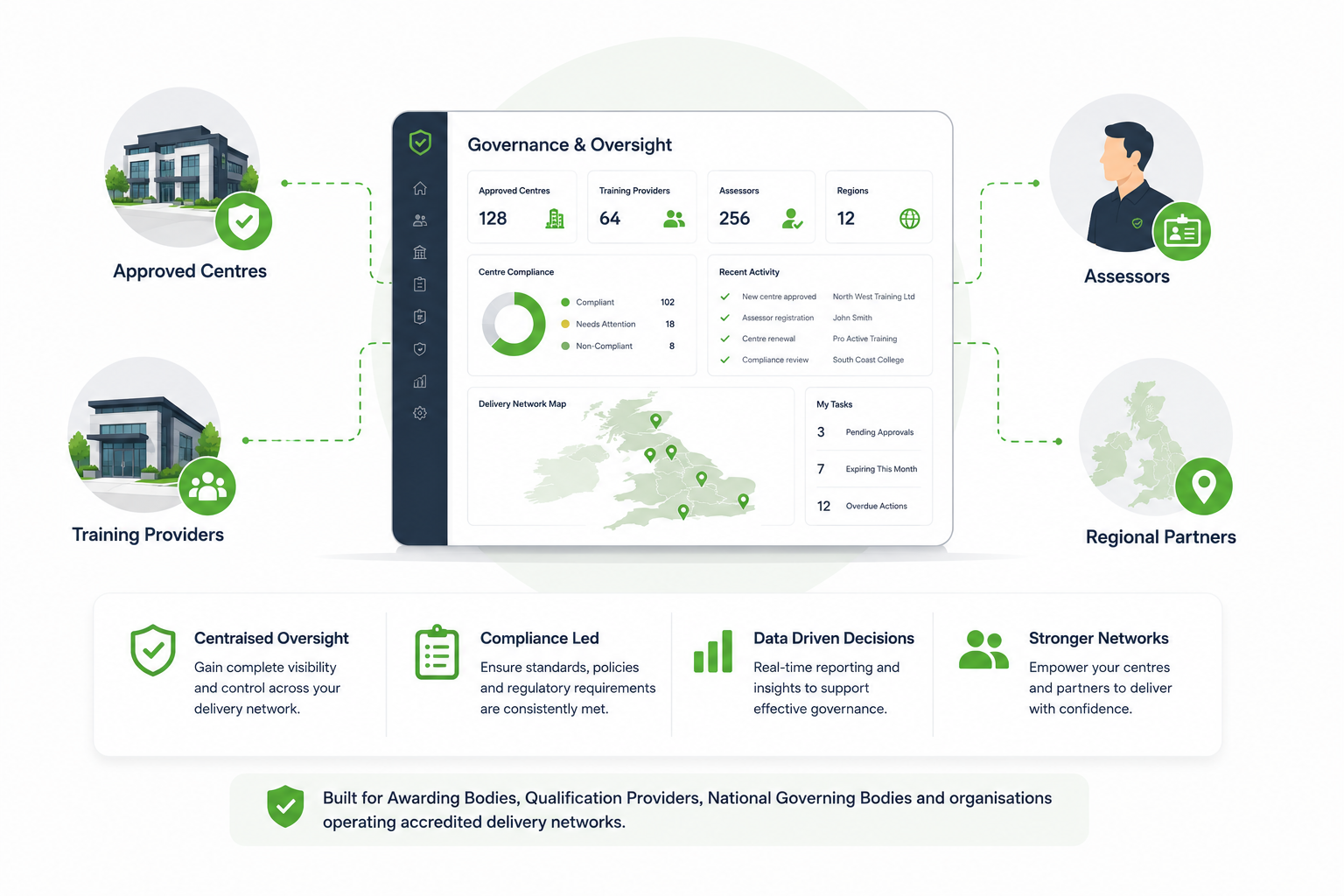
Manage approved centres, training providers, assessors and regional partners within one structured, compliance-led platform.
Built for Awarding Bodies, Qualification Providers, National Governing Bodies and organisations operating accredited delivery networks.
Approval workflows
Audit-ready oversight
Real-time dashboards
National standards. Local delivery.
Spreadsheets and disconnected systems create compliance blind spots.
Tahdah provides structured governance infrastructure..
Organisations delivering regulated or accredited programmes often operate through:
| Approved training centres | |
| Franchise networks | |
| Regional branches | |
| Employer-based delivery partners | |
| International affiliates |
Managing this ecosystem requires:
| Clear approval processes | |
| Structured permissions | |
| Ongoing monitoring | |
| Quality assurance workflows | |
| Transparent audit trails |
A structured governance framework
It is not just a directory — it is operational control.
Tahdah Centre Management enables you to:
-
Onboard and approve centres
-
Assign structured hierarchies
-
Define roles and permissions
-
Monitor delivery performance
-
Escalate compliance issues
-
Maintain full audit visibility
Select an option below:
- Centre Approval & Onboarding
- Role-Based Permissions & Governance
- Performance Monitoring & Dashboards
- Quality Assurance & Audit Trails
- Renewal & Accreditation Tracking
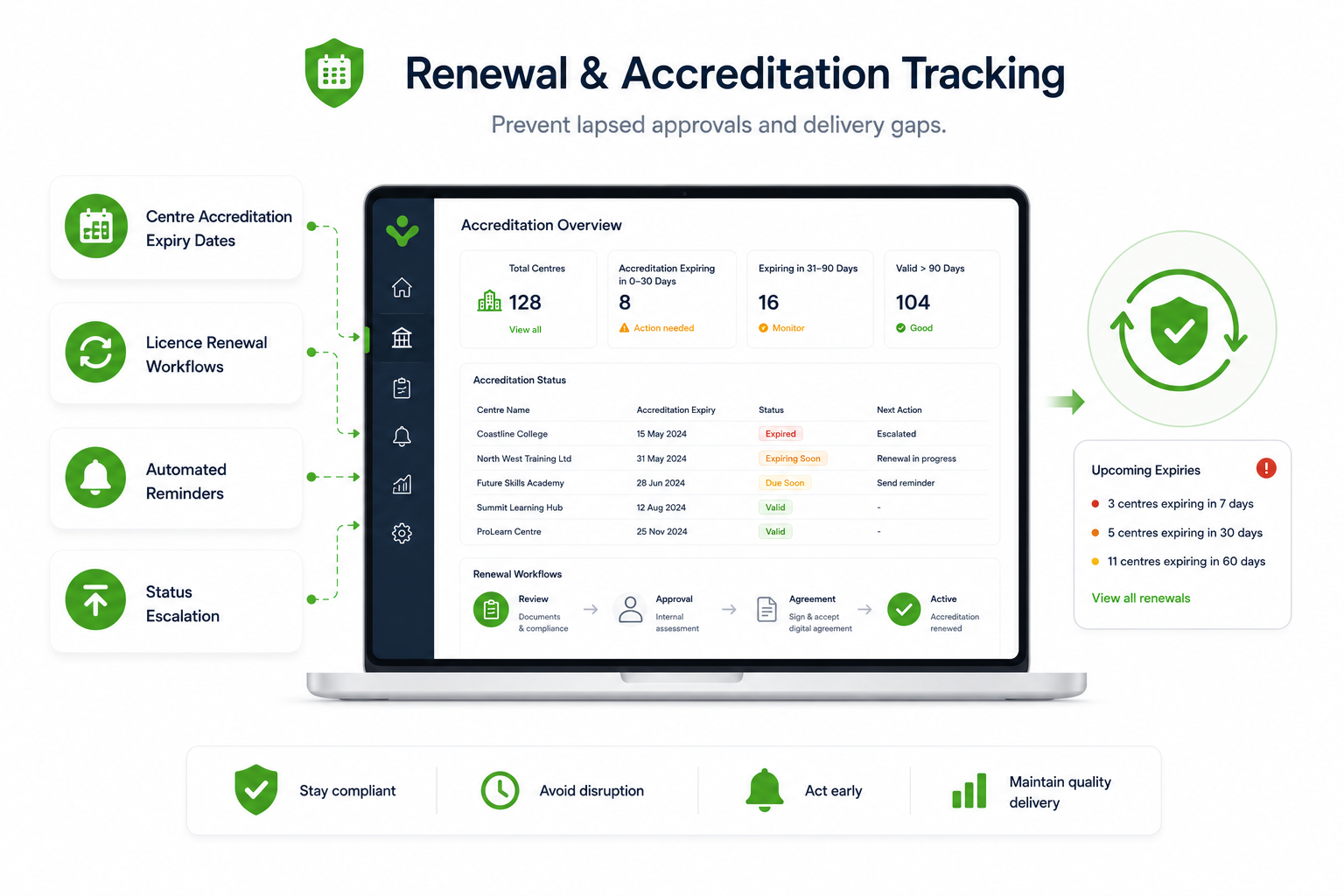
Renewal & Accreditation Tracking
-
Centre accreditation expiry dates
-
Licence renewal workflows
-
Automated reminders
-
Status escalation
Prevent lapsed approvals and delivery gaps.
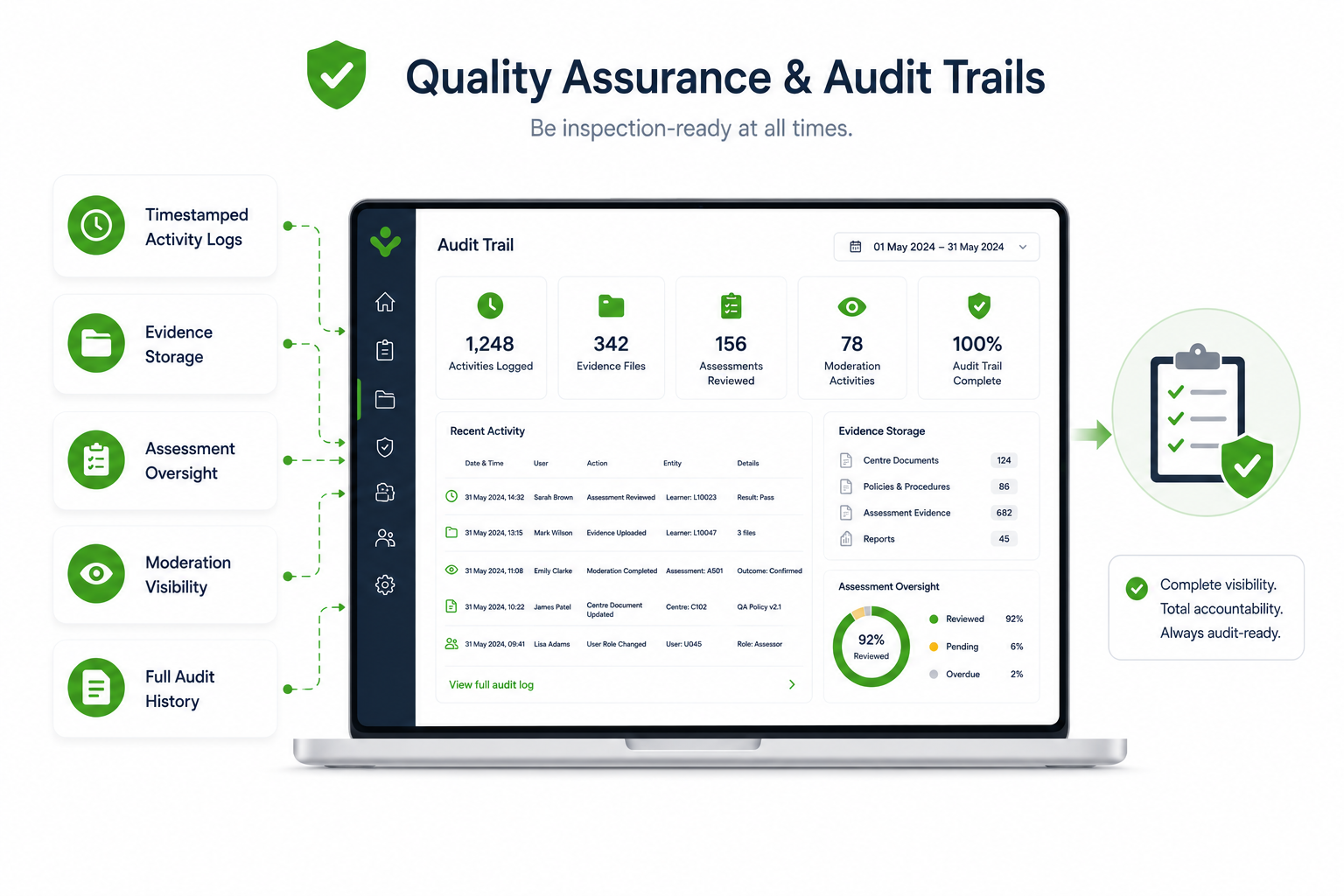
Quality Assurance & Audit Trails
-
Timestamped activity logs
-
Evidence storage
-
Assessment oversight
-
Moderation visibility
-
Full audit history
Be inspection-ready at all times.
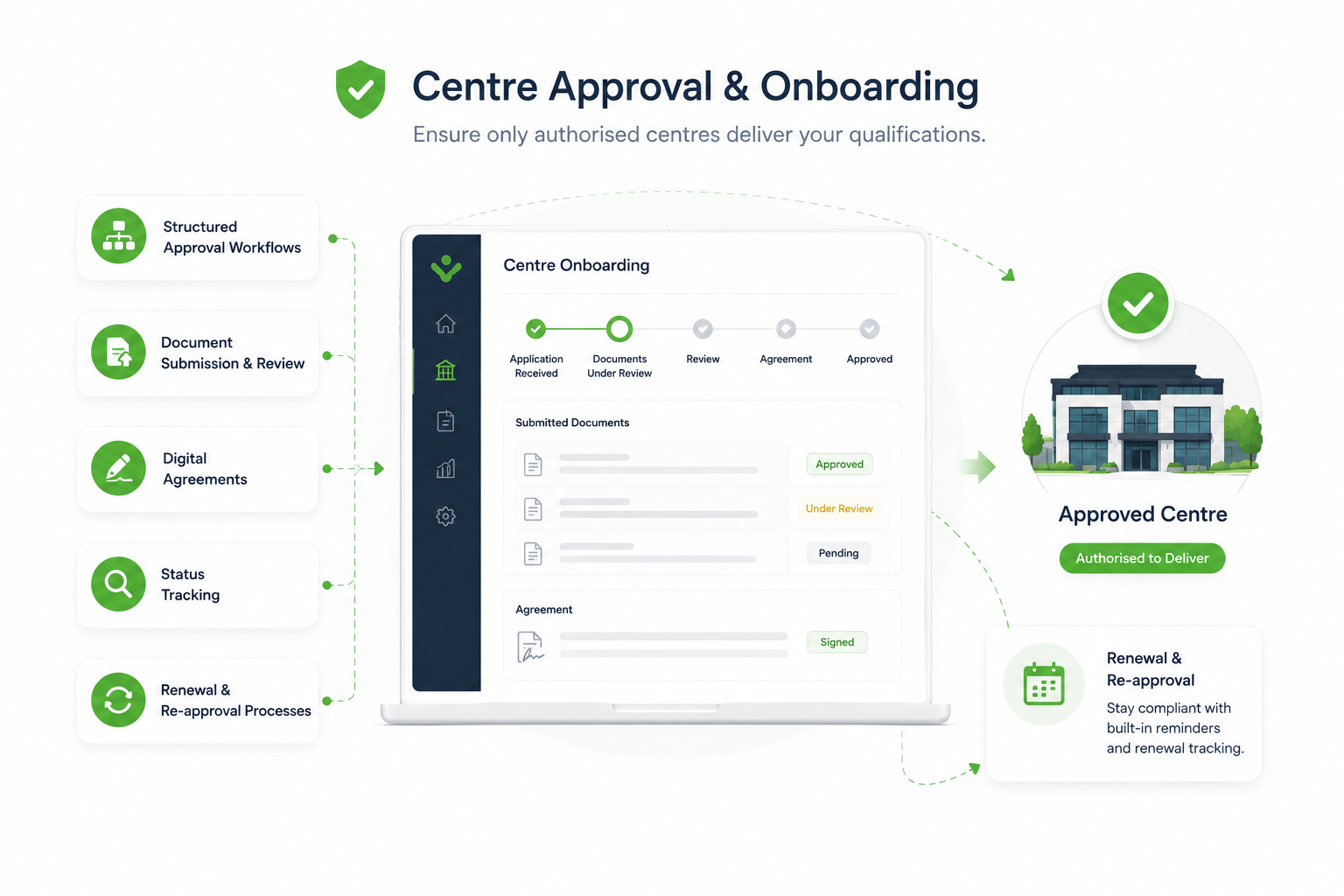
Centre Approval & Onboarding
-
Structured approval workflows
-
Document submission & review
-
Digital agreements
-
Status tracking
-
Renewal & re-approval processes
Ensure only authorised centres deliver your qualifications.
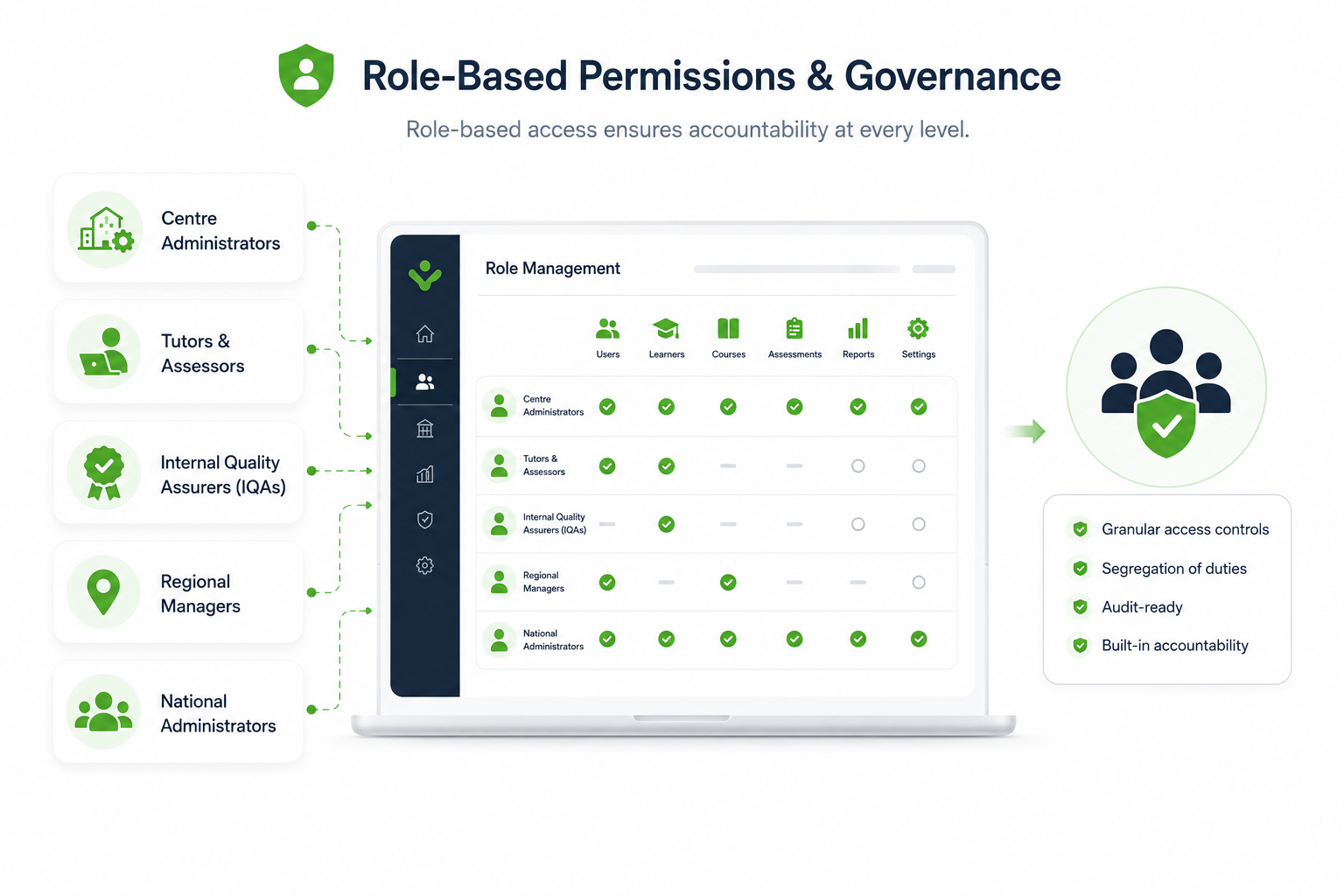
Role-Based Permissions & Governance
-
Centre administrators
-
Tutors & assessors
-
Internal Quality Assurers (IQAs)
-
Regional managers
-
National administrators
Role-based access ensures accountability at every level.
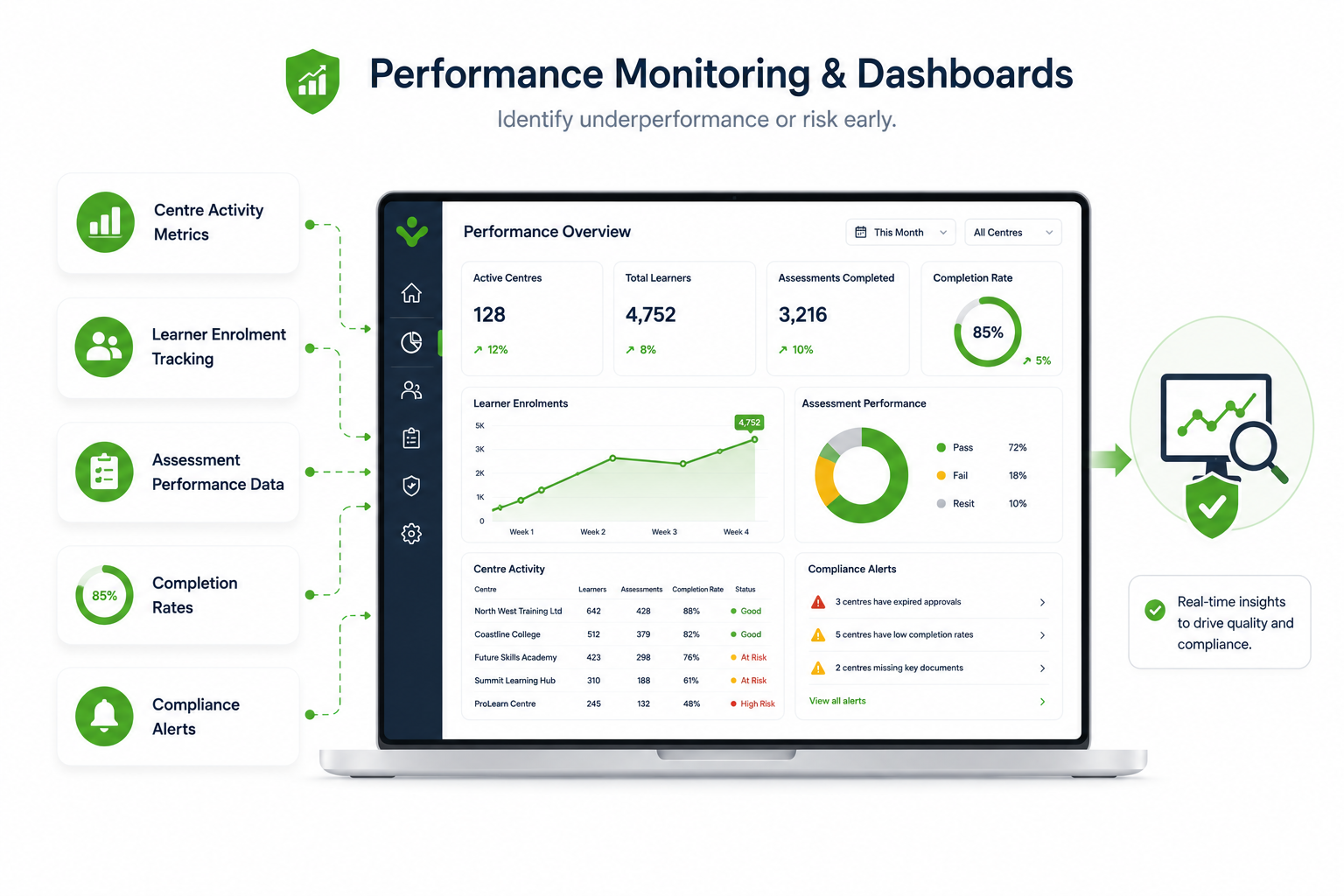
Performance Monitoring & Dashboards
-
Centre activity metrics
-
Learner enrolment tracking
-
Assessment performance data
-
Completion rates
-
Compliance alerts
Identify underperformance or risk early.
National oversight. Delegated control.
Governance remains centralised — delivery remains flexible.
Tahdah’s architecture supports:
-
National awarding organisations
-
Regional branches
-
Franchise networks
-
Employer-led delivery
-
International centre networks
You can:
-
Segment data by centre
-
Control visibility by role
-
Maintain national dashboards
-
Enable local operational autonomy
Centre Management does not operate in isolation.
When a centre delivers training, every learner action feeds into structured oversight dashboards.
No duplication. No data silos.
It integrates directly with:
-
Learning Management System
-
Assessment workflows
-
Digital certification
-
CPD tracking
-
Membership management
-
Identity verification
Common risks we help mitigate
Inconsistent Centre Standards
Structured workflows maintain uniform governance.
Limited Visibility Across Regions
Real-time dashboards provide national oversight.
Audit Preparation Burden
Activity logs and evidence are automatically stored.
Lapsed Accreditations
Automated expiry tracking prevents compliance gaps.
Fragmented Systems
One integrated platform replaces spreadsheets and disconnected tools.
Built for regulated & accredited environments
Compliance is embedded into system architecture.
Tahdah supports organisations operating under:
-
Ofqual regulatory frameworks
-
Industry accreditation schemes
-
Apprenticeship assessment standards
-
National qualification authorities
-
Professional licensing environments
Every centre interaction is:
-
Timestamped
-
Attributable
-
Securely stored
-
Audit logged
Benefits for your organisation
Organisations using Tahdah Centre Management achieve:
Improved centre governance
Reduced administrative overhead
Stronger compliance positioning
Faster issue identification
Greater transparency
Scalable national infrastructure
Centre Management becomes a strategic governance asset.
Different from generic LMS admin tools
Most LMS platforms treat centres as simple “groups”.
Tahdah was designed specifically for structured centre governance.
They rarely provide:
| Structured approval workflows | |
| Accreditation expiry tracking | |
| Audit-ready evidence | |
| Escalation processes | |
| Multi-tier hierarchies |
Need clarification?
-
What Is Tahdah Centre Management Software?
Training centre management software allows regulated organisations to govern, monitor and oversee a network of approved training centres, delivery partners or franchised providers from a single platform. It replaces disconnected spreadsheets and manual processes with structured approval workflows, role-based permissions, real-time performance dashboards and full audit trails — giving national bodies centralised control while allowing local centres to operate with appropriate autonomy.
Unlike generic LMS group management, it supports full qualification governance and regulatory oversight.
-
Who is Tahdah Centre Management built for?
Tahdah Centre Management is designed for Awarding Bodies, Qualification Providers, National Governing Bodies and any organisation that delivers regulated or accredited programmes through a network of approved centres. This includes organisations managing franchise networks, regional branches, employer-based delivery partners and international affiliates.
-
How does Tahdah handle centre approval and onboarding?
Tahdah provides structured approval workflows that guide centres through the onboarding process — including document submission and review, digital agreements, status tracking and re-approval processes. Only centres that have completed the required approval steps are permitted to deliver qualifications, ensuring that unauthorised delivery cannot occur.
-
Can Tahdah manage complex multi-tier centre hierarchies?
Yes. Tahdah's multi-tenant architecture supports complex delivery structures including national awarding organisations, regional branches, franchise networks, employer-led delivery and international centre networks. Data can be segmented by centre, visibility controlled by role, and national dashboards maintained — all while giving local centres the operational autonomy they need.
-
How does Tahdah prevent lapsed centre accreditations?
Tahdah includes automated expiry and renewal tracking for centre accreditations. The platform flags upcoming renewals and manages re-approval processes, preventing accreditations from lapsing unnoticed — a common compliance gap when organisations rely on manual tracking or calendar reminders.
-
What quality assurance and audit tools does Tahdah Centre Management provide?
Every centre interaction within Tahdah is timestamped, attributable, securely stored and audit logged. The platform maintains complete activity logs and evidence trails that are always accessible — eliminating the stress of preparing for regulatory inspections or responding to escalated compliance issues. Tahdah supports organisations operating under Ofqual regulatory frameworks, apprenticeship assessment standards, professional licensing environments and other national and international regulatory frameworks.
-
Does Tahdah Centre Management integrate with other systems?
Yes. Centre Management integrates directly with Tahdah's LMS, assessment workflows, digital certification, CPD tracking, membership management and identity verification. When a centre delivers training, every learner action feeds into structured oversight dashboards automatically — with no data duplication or manual reconciliation between systems.
-
What are the main compliance risks that Tahdah Centre Management helps mitigate?
Tahdah helps regulated organisations address five key centre governance risks: inconsistent centre standards (resolved through structured workflows), limited regional visibility (addressed by real-time dashboards), audit preparation burden (eliminated by automatic activity logging), lapsed accreditations (prevented by automated expiry tracking), and fragmented systems (resolved by replacing spreadsheets and disconnected tools with one integrated platform).